A collection of illustrated faces inside the Kids Helpline speech bubble showing different emotions.

Your guide to anxiety

Anxiety is a combination of stress (in your body) and worry (in your mind).

Way back in the day, anxiety was designed to keep you safe from danger. But now, stress can be complicated, long-lasting, and can result in a lot of anxiety ‘false alarms’.


Is this normal anxiety or do I have an anxiety disorder?

Normal anxiety

Normal anxiety is:

  • temporary and may come and go
  • manageable most of the time
  • in response to something stressful
  • unlikely to interfere with your usual everyday life.

Anxiety is really common with about 10% of people experiencing it in their lifetime.

Fortunately, anxiety is very treatable!

How to manage anxiety

Anxiety disorders

You might be experiencing an anxiety disorder if your anxiety:

  • seems to last a long time/longer than usual
  • feels very intense or overwhelming
  • causes you distress
  • interferes with your everyday life
  • is hard to cope with.

Anxiety disorders can include panic disorders, social anxiety, phobias, and Obsessive Compulsive Disorders.

anxiety Disorders

Want to learn more about anxiety and how to manage it? Check these out!

Your brain when you're anxious_THUMBNAIL
MENTAL HEALTH
Your brain when you're anxious
Anxiety can be really overwhelming, but sometimes it helps to know what’s going on in your brain when you feel this way.
Anxiety disorders_THUMBNAIL
MENTAL HEALTH
Anxiety disorders
Most people have experienced anxiety, but not everybody has an anxiety disorder. Let’s look at the difference.
How to manage anxiety_THUMBNAIL
Mental Health
How to manage anxiety
Anxiety can feel overwhelming, but there are some simple steps you can follow to start to feel calm again.
Coping strategies_THUMBNAIL
Mental Health
Coping strategies
If you are feeling stressed, anxious or just struggling to deal, there are lots of coping strategies you can try.
Self-care_THUMBNAIL
Mental Health
Self-care tips for teens
Looking after yourself is an important coping strategy. Let’s look at some self-care techniques you can try.
Self-harm_THUMBNAIL
MENTAL HEALTH
Self-harm
There are many reasons why someone might self-harm and everyone's story is different. Here's how to handle urges or support a friend.


Prefer to watch?

Check out some of our videos about anxiety below.

We answer your questions about stress management for teens, dealing with anxiety and insomnia, and breakdown what you should know about panic attacks.


Looking for ways to cope with anxiety?

We asked young people on Insta for their best coping strategies. Here's what you said!

You can view more coping strategies here.

A graphic showing text boxes asking “What’s your best coping strategy at the moment?” with responses including cuddling a pet, watching baking videos, chocolate, and staying active.
A graphic with repeated text boxes asking “What’s your best coping strategy at the moment?” and responses including using YouTube and Instagram, keeping focused on school work, and breathing slowly.
A graphic showing multiple text boxes with the question “What’s your best coping strategy at the moment?” and responses including turning off the news, staying in touch with friends online, setting goals, mindfulness colouring, and spending time cooking with a pet.
A graphic with text responses to the question “What’s your best coping strategy at the moment?” including reorganising a room, listening to music and writing, and yoga.
A graphic showing responses to the question “What’s your best coping strategy at the moment?” including art and drawing, art and yoga, and hanging out with family.
A graphic with text responses to the question “What’s your best coping strategy at the moment?” including watching Netflix with family, staying in touch with family and friends, and meditation.


Self-care

Your nutrition, movement, and sleep habits all impact on both your brain and your mental health.

Self-care is about meeting your basic needs so you can be physically and mentally healthy. 

Click each image to expand it.
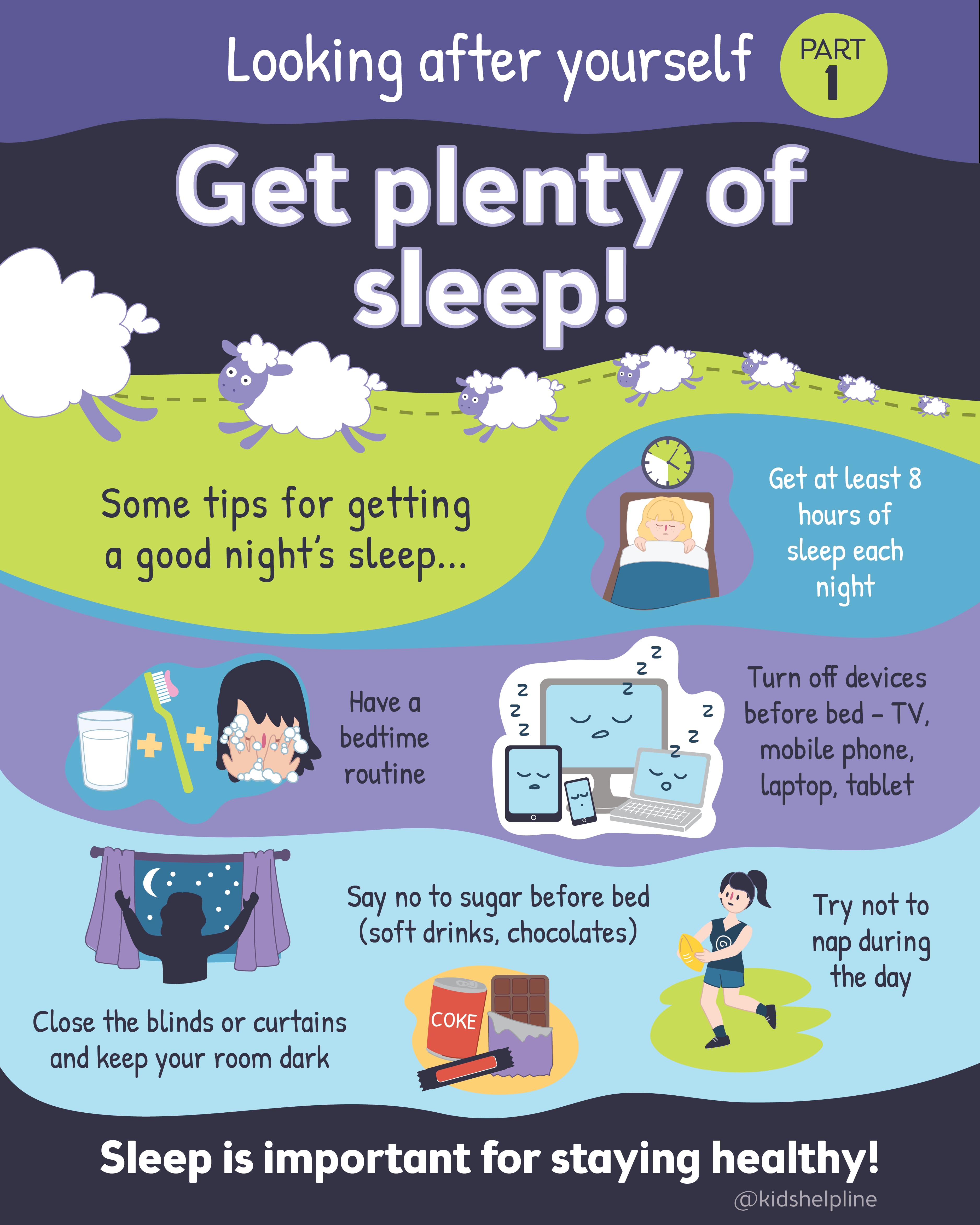
An infographic titled “Looking after yourself – Get plenty of sleep!” showing illustrated tips including getting eight hours of sleep, turning off devices before bed, having a bedtime routine, keeping the room dark, avoiding sugar before bed, and not napping during the day.

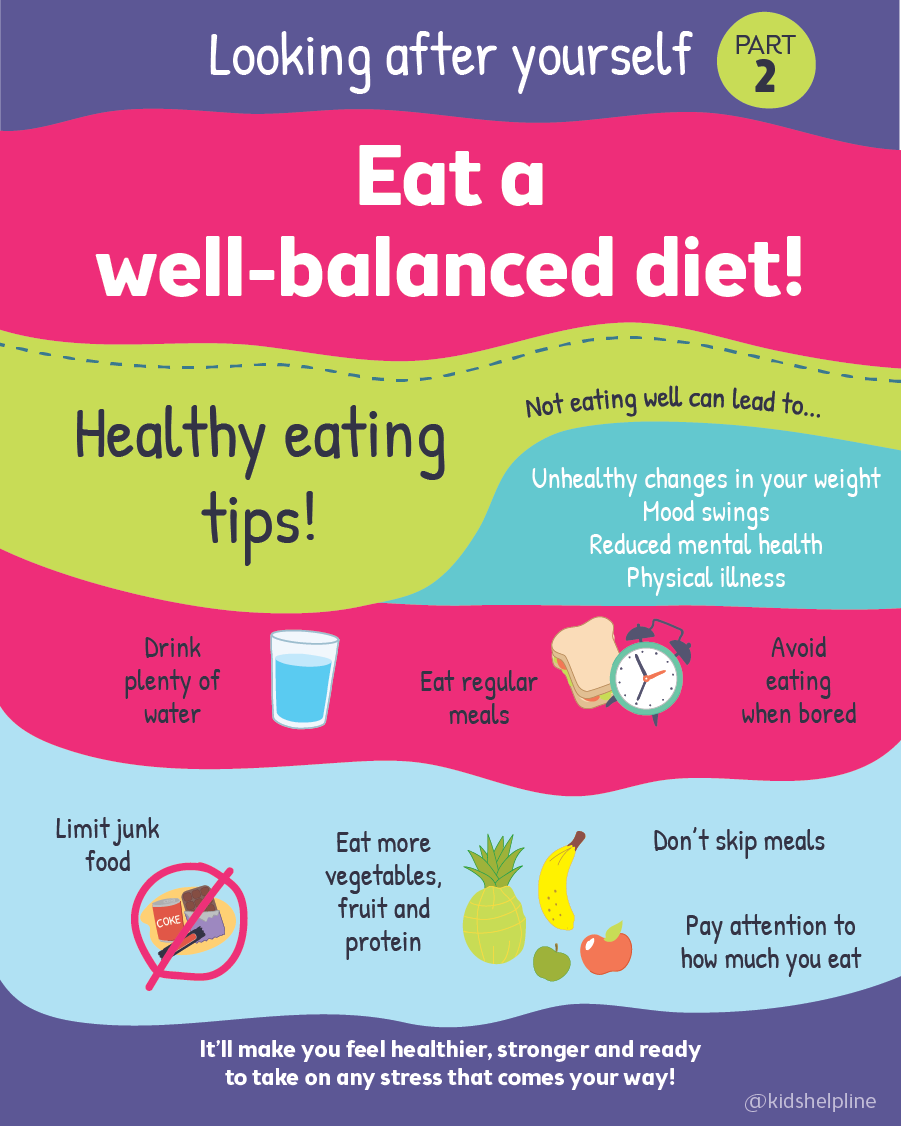
An infographic titled “Looking after yourself – Eat a well‑balanced diet!” showing healthy eating tips such as drinking water, eating regular meals, limiting junk food, eating fruit and vegetables, and not skipping meals.

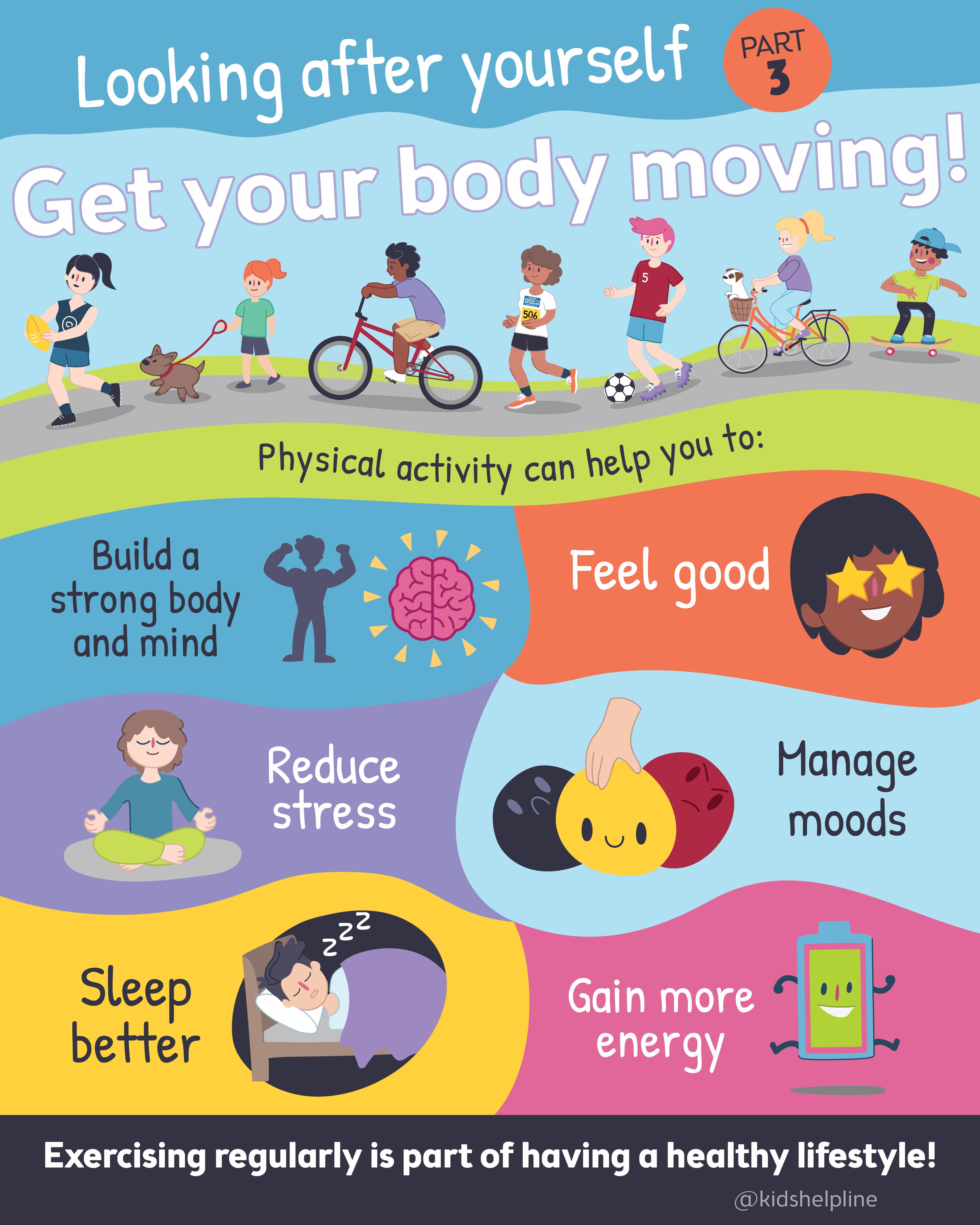
An infographic titled “Looking after yourself – Get your body moving!” showing illustrated people doing different activities and text about building strength, reducing stress, managing moods, sleeping better, and gaining energy.


You don't have to figure it out alone

Whatever’s going on, it can help to talk things through with someone who will listen without judgement.

Give us a call or start a webchat to get respectful and confidential support.

Contact us!

Call 1800 55 1800 or start a webchat

Message us.png

Get peer support!

My Circle is Kids Helpline's safe and confidential social platform.

Email us.png

Download our wellbeing app

A personalised mental health plan in your pocket.

This content was last reviewed 18