Your guide to abuse: everyone has a right to be safe
It's normal to have some conflict in your family. Healthy conflict can be very emotional, but it's respectful and can usually be resolved through assertive communication.
Abuse is different from conflict. It takes many forms. Abuse is never ok, and it's never your fault.
If you or someone you know is being abused, here's some info that can help.


At Kids Helpline, we're committed to providing services that protect and keep you free from harm.
What is an unsafe secret?
Unsafe secrets might involve:
- Someone who may be in danger (past, present or future, e.g. someone who experienced sexual abuse)
- Someone who may have impaired judgement (e.g. someone who is feeling suicidal)
- A power imbalance (e.g. an adult ordering a teen to keep a secret)
- Threats or bribes (e.g. “If you tell anyone, I will never speak to you again!”)
- Someone unable to give consent (e.g. someone considered a 'minor' by the law)
- Something against the law, e.g. image-based abuse
A secret may also be unsafe if...
- it affects your wellbeing (e.g. you can't sleep because you’re worried)
- you feel stuck or don’t know what to do
- you find yourself agonising between breaking a promise and getting help/advice/support.
Unsafe secrets are a common feature of different kinds of abuse towards young people.
How to get help
Abuse thrives on secrecy.
Abuse rarely resolves without intervention, as abusers want it to be kept secret so they can keep abusing.
Asking for support and not knowing what comes next can be frightening. But getting support is the best way to stop the abuse.
Scroll through these helpful hints on how to start a conversation with someone you trust (like a teacher, school counsellor or Kids Helpline counsellor).
Give a heads up
Start by giving a heads up that you need to talk about something serious, e.g., "I need to talk about something really serious. Is now a good time?"
Be upfront
Be upfront about any concerns or fears you have in confiding in them, e.g., "To be honest, I'm worried that if I tell you about it, you might get angry and yell... But I really want your help!"
Explain the conversation dynamic
Tell them how you would like the conversation to go, e.g., "I would really like it if you could just listen and stay calm while I explain what happened."
Tell them what you need from them
"I really need help to figure out what to do next."
Make sure they understand
Make sure they have an accurate understanding of the situation. A great way to do this is to make some time/space in the conversation for questions, e.g., "Does that make sense? Do you have any questions about what happened?"
Build in space for them to process it
This can prevent them from responding emotionally, e.g., "I'm going to go to my room now to give you some space to process. Maybe we could talk about it some more after dinner?"
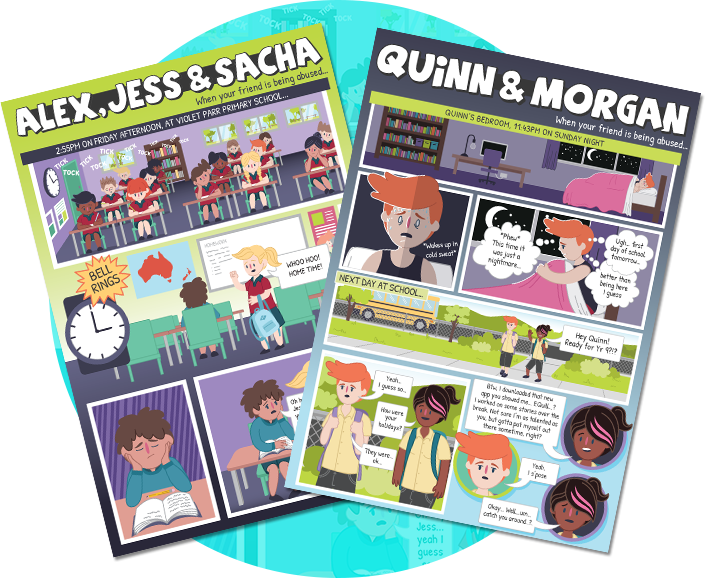
When you think a friend is being abused at home...
It can be hard for kids to know what to do when their friend is being abused.
Check out these comics created by young people in primary and high school, and Kids Helpline counsellors


This content was last reviewed 1