My friend is unsafe at home
You might learn (or suspect) a friend is experiencing family violence and not know how to support them. Here are some things that can help.

Content Warning: this article contains violence and trauma related content that may be triggering or distressing.
Family violence
Family violence refers to violence, abuse and intimidation in families. It’s sometimes referred to by other names, like domestic violence.
It might involve witnessing abuse between adult partners, or experiencing abuse towards family members including children (and even pets). The types of abuse can include:
- Emotional/psychological abuse
- Physical assault/violence
- Sexual assault
- Verbal abuse
- Financial abuse
- Isolation
Talking about it
Friends often confide in each other about things that are going on in their life. If your friend tells you they are experiencing violence or abuse at home, or you have noticed signs that make you concerned for them, here’s how you can talk about it:
- Let them know you are worried
- Ask questions, e.g. “What are things like at home?”
- Listen and let them talk at their own pace
- Let them know you are there for them
- Show empathy, e.g. “It must be hard to experience that.”
- Don’t push them to say more than they feel ready to
- Don’t make them do anything they’re not ready to
- Encourage them to seek professional support (you can do this together)
The next step – get support
Once you find out a friend is unsafe at home, the next step is to get support.
It’s important to tell a trusted adult like a parent, teacher, school counsellor or Kids Helpline what’s been happening. Sometimes, your friend might already have supports or might be willing to get support themselves, which is really great! You can even help them tell someone they trust by going with them for ‘moral support’. You can also talk to Kids Helpline confidentially (and anonymously) if you want support around the best ways to support a friend who is experiencing family abuse.
"Friends are often the first to notice that something is not quite right. You might feel torn between keep your friend's secret, but also wanting the abuse to stop. Getting support can help you explore options and make a good choice."
Abuse thrives on secrecy
Abusers choose who they abuse, when they abuse and how they abuse. They often take steps to ensure those they are abusing keep a secret, so they can keep abusing them. Often, abuse won’t stop without intervention.
My friend asked me to keep it a secret…
In some cases, your friend might ask you to keep what’s happening a secret.
It’s understandable that you might not want to betray their trust, but you’re also really scared for them and don’t know what to do. It’s normal to feel stuck and unsure.
Sometimes, people are often scared that telling someone will mean Child Protection will ‘take them away’ from their family. This fear can help abusers to keep on abusing by keeping young people isolated or stopping them from seeking help.
It’s true that Child Protection might get involved in some cases of family violence. They want to keep families together and aim to work with families to help everyone involved – including abusers.
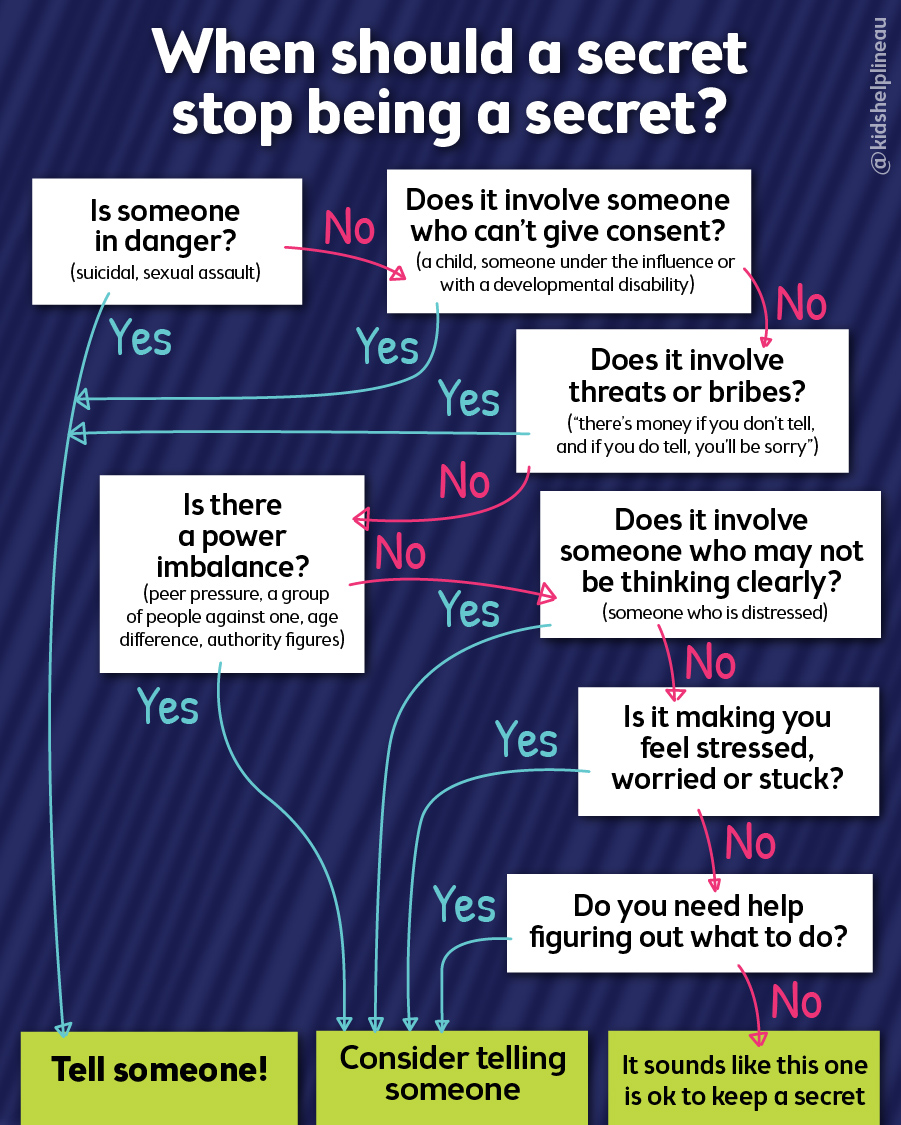
“Sometimes, being a friend means giving your friend what they need, rather than what they want. It means making their safety the top priority.” - Amanda, Kids Helpline Counsellor
Look after yourself
Supporting a friend who is being abused might impact on your own mental health.
Mental health symptoms, like feeling anxious or depressed can be a normal, natural response to hearing about a friend’s trauma or being concerned for a friend’s safety.
Your wellbeing is important too and it’s important to look after yourself. Here are some things that might help:
- Self-care - make sure you are looking after your body with a healthy diet, exercise and sleep.
- Coping strategies - find ways to de-stress, that work for you.
- Seek support - if you are struggling to cope, it’s ok to seek support, especially if it’s impacting on your wellbeing.
- Focus on what you can control - it can be very hard knowing a friend could be in danger and feeling helpless. When you focus on what you can control, such as telling a trusted adult, you are ensuring you are doing everything to help your friend – not just in the short term, but the long term too.
When your friend is being abused
Morgan is worried about Quinn. He hasn’t been at school and has disappeared online…
Then Quinn opens up about something serious that has been going on at home. He doesn’t know what to do and isn’t sure anyone will believe him.

Support services
Child Protection services vary from state to state.
- Queensland
- Victoria
- New South Wales
- South Australia
- Northern Territory
- Tasmania
- Western Australia
- Australian Capital Territory
If you have a friend who is feeling unsafe, we’re here to help
No matter how alone or worried you feel, Kids Helpline will always listen and support you. You can contact us alone or together.
It can be scary to talk about it, but we listen and we care. Give us a call or start a WebChat anytime, for any reason.


This content was last reviewed