Suicide and self-harm: your guide to staying safe
Feeling unsafe right now? Thinking about suicide? Check out our strategies for staying safe.

If you or someone you care about is in immediate danger please call 000


Remember, you can get anonymous and confidential support from Kids Helpline. We're here 24 hours a day, seven days a week.
Safety strategies
If you are feeling unsafe beyond your ability to cope, or are at immediate risk of suicide or significant self-harm, seek professional support urgently!
Here are some things that can help:
- Delay. Thoughts of suicide and self-harm will pass. Delaying acting on any thoughts to end your life gives you time to get support.
- Distract. Thoughts can be very overwhelming. Your brain isn't great at multitasking and you might be able to distract yourself from unwanted thoughts by doing things you enjoy, e.g. playing games.
- Be around others. If you are feeling unsafe, avoid being alone. Spend time with family or friends until you feel safer.
- Get support. Speak to trusted family, friends or contact a professional support or crisis line for support.
- Make your environment safe. Remove or get rid of anything you might use to harm yourself.
- Create and follow a safety plan. It can be hard to think clearly when feeling unsafe. A safety plan is a personalised list of instructions you can follow to stay safe. You can make one on your own or with someone who supports you, such as your psychologist or a Kids Helpline counsellor.
Remember: Self-harm and suicidal thoughts and feelings will pass. Your safety is top priority.
Supporting a friend
If you think a friend is feeling unsafe (but it isn't an emergency), you may not know what to say or do.
Here are some things that can help you have the conversation:
- Express concern. An easy way to do this is to make an observation about any changes in behaviour you've noticed. "You haven't seemed like your usual self lately. Do you want to talk about it?"
- Listen with empathy. The most important thing is to listen without judging.
- Be curious. Ask questions about what's going on for them, their emotions, supports and needs. (Don't focus on how they may harm themselves).
- Be direct. Ask, "Are you thinking about suicide?" or "Are you planning to harm yourself?" (It's a myth that this will 'put the idea in their head').
- Don't make it about other people. Saying things like, "How would your parents feel if you hurt yourself?" can actually make things worse.
- Don't make promises you can't keep. Don't promise to keep self-harm or suicidal thoughts a secret.
- Get support as soon as possible. People who are feeling unsafe might find it hard to think clearly or make safe decisions. It's very important to help them get support. Supports might include a teacher or counsellor at school or university, a professional like a psychologist or Kids Helpline counsellor, etc..
Remember: Supporting a friend who is at-risk can be stressful and impact on your own wellbeing. It's important to look after yourself, too!
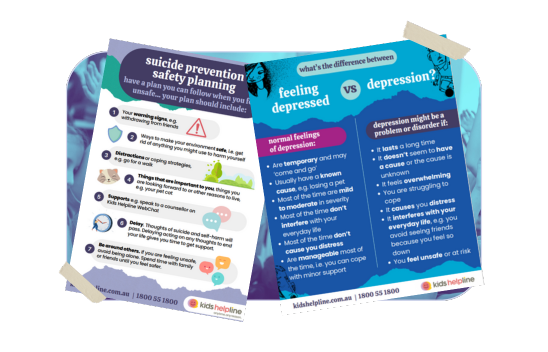
Looking for resources on suicide, self-harm, and depression?
Check out our posters, social posts, and other resources.


This content was last reviewed 1